

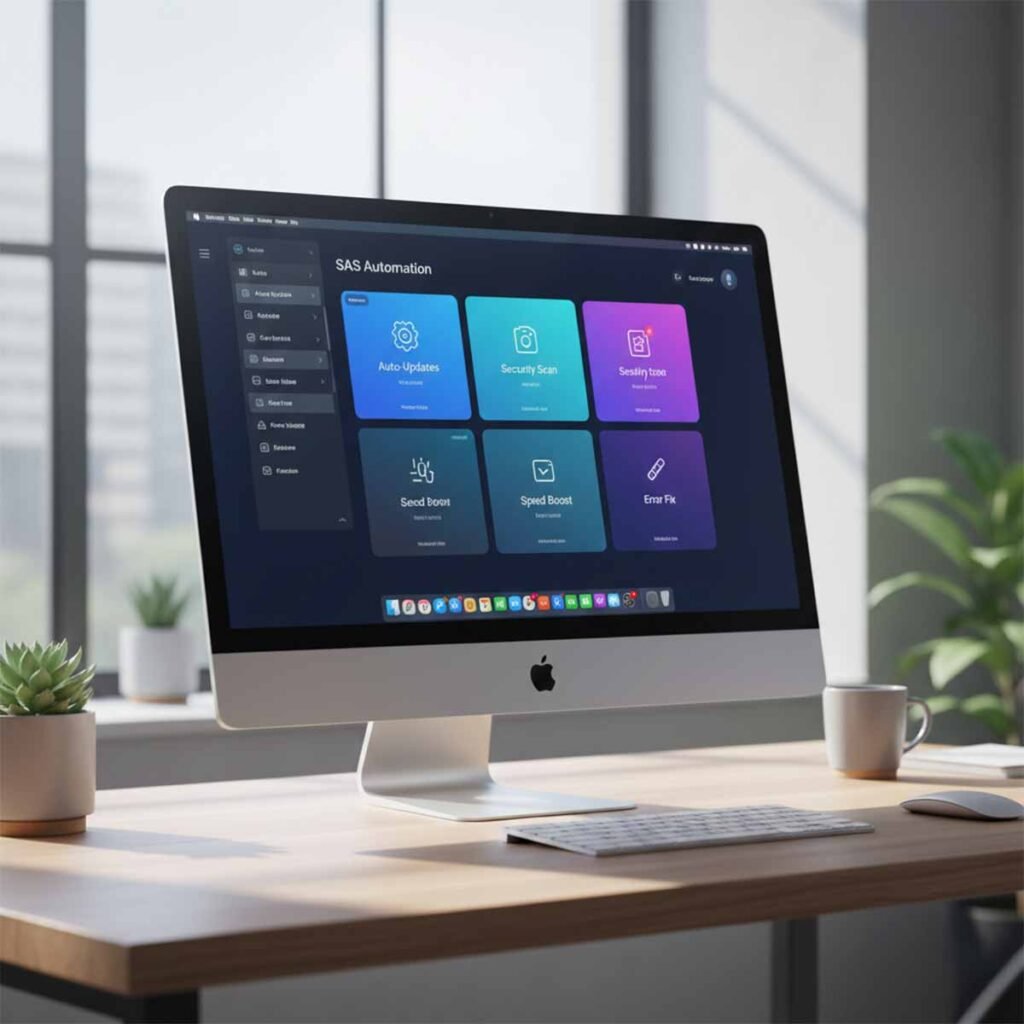
The 2025 Automation Shift is changing everything about how small businesses run their digital operations.
For years, companies relied on developers, plugins, and manual processes just to keep their websites functioning — and every update meant more money, more delays, and more problems.
But in 2025, something new is taking over.
Businesses are moving toward a model where the setup, automation, and maintenance are handled for them — not by them. This new approach is called SaaS-as-a-Service, and it’s quickly becoming the preferred choice for modern businesses that want speed, stability, and predictable costs.
In this guide, you’ll discover how the 2025 Automation Shift is replacing outdated workflows and giving small businesses a faster, cleaner digital system that works 24/7 without the usual headaches.
Why 2025 Is a Turning Point
2025 isn’t just another year of digital upgrades — it’s the moment when businesses finally realised that their old systems were holding them back. The 2025 Automation Shift happened because three major forces collided at the same time:
1. Software costs kept increasing
Hiring developers for even small changes became too expensive for small businesses. A simple website fix could cost more than the website itself.
2. Plugins became unstable and risky
Plugins stopped being “quick fixes.”
They turned into a constant source of conflicts, updates, warnings, security issues, and unexpected downtime.
3. Manual work became unsustainable
Teams were spending hours on tasks that could easily be automated — sending emails, updating orders, copying data, managing spreadsheets, or fixing errors.
Together, these pressures created the perfect environment for the rise of SaaS-as-a-Service — a model that removes the complexity and gives small businesses something they’ve never had before: speed, stability, and peace of mind.
The 2025 Automation Shift is not a trend. It is a complete reset of how modern businesses now expect their digital systems to work.
Pain Points of Old Systems
Before the 2025 Automation Shift, most small businesses were trapped inside systems that were never designed to scale. They relied on outdated methods that looked simple from the outside but caused major problems behind the scenes.
1. Overdependence on developers
Every feature, every button, every update required a developer.
Small changes turned into long delays, creating frustration and unnecessary costs.
2. Too many plugins doing too many things
Websites became fragile because they relied on dozens of third-party plugins.
One plugin update could break the entire site — and most business owners had no idea why.
3. Manual tasks nobody had time for
Order updates, customer emails, notifications, follow-ups, spreadsheets — everything was manual.
People weren’t doing real work. They were just keeping systems alive.
4. Zero consistency across platforms
The website, app, email platform, CRM, and support system all worked separately.
Nothing talked to each other, so errors happened every single day.
5. Frequent downtime and security risks
Cheap plugins and patched systems increased security vulnerabilities, forcing businesses to constantly fix fires instead of growing.
This is exactly why the 2025 Automation Shift became necessary — businesses simply outgrew the old way of working.
What SaaS-as-a-Service Really Means
Most people think SaaS-as-a-Service is “just another subscription,” but it’s far more powerful — and it’s the real driver behind the 2025 Automation Shift.
Traditional SaaS gives you software.
SaaS-as-a-Service gives you the software and the team that runs it for you.
Here’s what that means in simple terms:
1. No installations or setup headaches
Everything is configured by experts.
You never touch code, settings, or technical panels.
2. No plugins to maintain
Instead of stacking risky plugins, your business gets clean, stable automation flows built with platforms like n8n, not bloated add-ons.
3. No developers required for updates
Updates, fixes, and improvements happen automatically in the background — without hiring anyone.
4. A fully managed automation system
Your website, mobile app, emails, payments, reviews, CRM, and notifications all talk to each other seamlessly — because the system is designed for you, not by you.
5. A predictable monthly cost
No surprise developer bills.
No plugin conflicts.
Just one reliable service that keeps your digital ecosystem running 24/7.
This is why SaaS-as-a-Service is at the center of the 2025 Automation Shift — it removes the burden from business owners and delivers a cleaner, faster system they no longer need to manage manually.
How SaaS-as-a-Service Replaces Developers
For years, small businesses believed they needed developers for every small website or app change. But the 2025 Automation Shift proved something different: most of the work developers were hired for can now be handled automatically through managed SaaS-as-a-Service systems.
Here’s how:
1. Pre-built automation flows replace custom coding
Tasks that previously required manual coding — order updates, email triggers, data syncing, notifications — can now be built visually using platforms like n8n, and fully managed for you.
2. No more paying £50–£200 for every small fix
Changing a button, updating a form, or adjusting a workflow no longer needs a developer.
Your SaaS-as-a-Service provider handles it instantly through centralised automations.
3. Faster deployment with zero downtime
Developers often need hours or days to implement updates.
With SaaS-as-a-Service, updates roll out instantly and safely, without breaking the site.
4. No dependency on a single person
If a developer disappears, gets busy, or changes their pricing, your business slows down.
SaaS-as-a-Service removes this risk by providing a stable, always-available technical team.
5. Smart systems learn your workflow
Over time, your automated system adapts to how you operate, making everything faster — something manual developers cannot offer at scale.
The 2025 Automation Shift didn’t remove the need for developers — it removed the dependency on them. Businesses now get speed, stability, and predictable costs without relying on individual programmers.
How It Replaces Plugins
Before the 2025 Automation Shift, plugins were seen as shortcuts — quick tools to add features without coding. But over time, plugins became one of the biggest weaknesses in small business websites.
SaaS-as-a-Service eliminates these problems by replacing plugins with stable, managed automation systems.
1. No more plugin conflicts
Plugins often break each other.
One update can crash an entire website.
SaaS-as-a-Service replaces risky plugins with clean workflows built on secure automation tools.
2. No third-party dependency
You’re no longer relying on unknown developers to maintain your website features.
Your provider manages everything internally — no abandoned plugins, no outdated code.
3. Faster performance, fewer failures
Plugins add heavy scripts and slow down websites.
Managed automation runs light and efficiently, improving both speed and user experience.
4. Centralised control
Instead of having 25 plugins doing 25 tasks, your business gets one central automation system that handles everything smoothly behind the scenes.
5. No sudden “critical update required” warnings
Your SaaS-as-a-Service team handles updates automatically, so your business stays online with zero interruptions.
This is one of the biggest advantages of the 2025 Automation Shift — businesses get all the features they need without the instability of plugin-based systems.
How It Removes Manual Work
Manual work used to be a normal part of running a business — sending emails, updating orders, tracking customers, copying data into spreadsheets, and managing notifications. But the 2025 Automation Shift has shown that almost all of this can be automated without hiring staff or using complicated tools.
Here’s how SaaS-as-a-Service removes the manual workload:
1. Automatic customer communication
Order confirmations, status updates, payment alerts, reminders, and review requests are triggered instantly with zero human involvement.
2. Automatic data syncing
Your website, app, CRM, payment gateways, and support platforms all sync in real time.
No more copying data from one place to another.
3. Automatic workflows for operations
Inventory updates, booking confirmations, lead routing, staff notifications, and follow-ups all happen automatically — powered by your managed automation system.
4. Automatic error prevention
Most human mistakes happen during manual data entry.
SaaS-as-a-Service reduces these errors to almost zero by letting the system handle everything.
5. Automatic reporting
Daily summaries, analytics, business insights, and performance reports are delivered to your inbox automatically, saving hours every week.
The result of the 2025 Automation Shift is simple:
Businesses finally stop wasting time on repetitive tasks and focus on what actually grows the business.
Real Use Cases (NanoAI Style)
The real strength of the 2025 Automation Shift becomes clear when you see how small businesses are using SaaS-as-a-Service in everyday scenarios. Here are real, practical use cases that reflect how NanoAI systems work behind the scenes:
1. Website → Mobile App with Zero Coding
A business gets a full mobile app version of their website without hiring developers.
New pages, products, or updates on the website automatically sync to the app — no plugins, no manual updates.
2. Automated Order Tracking & Customer Updates
Instead of staff sending emails, the automation system sends real-time order updates, tracking links, and delivery confirmations based on live courier data.
3. Lead Capture → CRM → WhatsApp Sequence
When a lead fills out a form, the system instantly:
- Adds them to the CRM
- Sends a WhatsApp welcome message
- Alerts the sales team
- Starts a follow-up automation
No developer, no plugin, no human involvement.
4. Subscription Reminders & Failed Payment Recovery
The SaaS-as-a-Service system automatically handles:
- Expiry reminders
- Payment retry logic
- Customer notifications
- Account updates
Businesses recover revenue without lifting a finger.
5. Automated Data Cleanup & Reporting
Duplicate contacts, missing order data, and incomplete customer info get cleaned automatically.
Daily business insights are delivered to the owner’s inbox — powered by the same automation system.
6. Multi-Channel Sync (Website, App, CRM, Email)
All platforms communicate seamlessly.
Changes made in one system reflect everywhere else in real time — a core advantage of the 2025 Automation Shift.
7. Review Collection & Reputation Boosting
After every order, the automation sends a timed review request with the correct tracking details, increasing reviews without manual work.
These use cases show how SaaS-as-a-Service turns complicated processes into a fully automated, stable system that grows with the business. This is exactly why the 2025 Automation Shift is becoming the new standard across industries.
Why This Shift Matters
The 2025 Automation Shift isn’t just another technology trend — it’s a turning point that directly affects how small businesses survive and grow in a fast-changing digital world.
Here’s why this shift matters more than ever:
1. Businesses can finally scale without increasing staff
Automation handles repetitive tasks so teams can focus on sales, service, and growth instead of admin work.
2. Digital systems become stable and predictable
No more plugin crashes.
No more waiting for developers.
No more unexpected downtime.
Everything works consistently, the way it should.
3. Costs become transparent and controllable
Instead of random expenses for fixes, updates, and emergency support, SaaS-as-a-Service provides one clean, predictable cost.
4. Small businesses compete at enterprise level
With automated workflows, mobile apps, synced platforms, and 24/7 systems, even small businesses operate like large organisations.
5. Owners get their time back
Business owners no longer waste hours on maintenance, emails, spreadsheets, or troubleshooting — the system handles it all.
The 2025 Automation Shift matters because it gives businesses the one thing they never had before:
a fast, stable, automated digital foundation that grows with them, not against them.
Ready to Upgrade Your Business for the 2025 Automation Shift?
If you’re tired of plugins breaking, developers delaying your progress, and endless manual work slowing down your growth — it’s time to switch to a system that runs itself.
NanoAI builds and manages your entire automation ecosystem:
- Website → Mobile App conversion
- n8n automation workflows
- Payment & CRM integrations
- Smart notifications & customer updates
- Fully managed SaaS-as-a-Service setups
- Zero plugins, zero downtime, zero headaches
Let us build the system that runs your business — while you focus on growing it.
Your transformation starts the moment you decide to leave the old systems behind and step into the 2025 Automation Shift.